
Introduction
When designing electronic equipment, the choice between custom and off-the-shelf cable harnesses is a pivotal decision. Cable harnesses are essential for transmitting power and signals in devices, from automotive systems to industrial machinery. Off-the-shelf harnesses offer convenience and lower upfront costs, while custom harnesses provide tailored solutions for complex applications. Understanding the trade-offs is key to optimizing your product's performance and budget. cable harness manufacturers offer both options, and their expertise can help you navigate this decision. This article explores the differences to assist you in making an informed choice. Whether you are developing a new product or upgrading an existing system, the right harness can enhance reliability and efficiency. By considering factors like environment, volume, and compliance, you can determine which type suits your needs.
Off-the-Shelf Cable Harnesses
Off-the-shelf cable harnesses are pre-designed and mass-produced. They are available in standard lengths, connectors, and configurations. The main advantage is immediate availability and lower cost. For standard applications, they can be a reliable choice. However, they may not fit custom enclosures or meet specific performance criteria. For example, in high-vibration environments, standard harnesses might require additional securing. They are ideal for prototyping or low-volume production where customization is not critical. Additionally, off-the-shelf harnesses often come with established quality assurance, as they are produced in volume. Yet, they may lack the flexibility needed for unique designs. They are widely used in consumer electronics and general industrial applications. Their standardized nature allows for easy replacement and scalability.
Custom Cable Harnesses
Custom cable harnesses are designed from scratch to meet exact requirements. They offer flexibility in length, wire gauge, connector types, and jacketing materials. This ensures optimal fit and function. Custom designs can incorporate specific features like overmolding for strain relief or specialized shielding for EMI protection. While the initial tooling and design costs are higher, they can reduce assembly time and improve system reliability. Industries such as medical devices often require custom harnesses to meet regulatory standards. Quality management systems like ISO 9001 ensure consistent production quality. Custom harnesses also allow for better inventory management, as they are produced to order. They are essential for aerospace, automotive, and specialized equipment. The design process involves collaboration between engineers and manufacturers to ensure all requirements are met.
Factors to Consider When Choosing
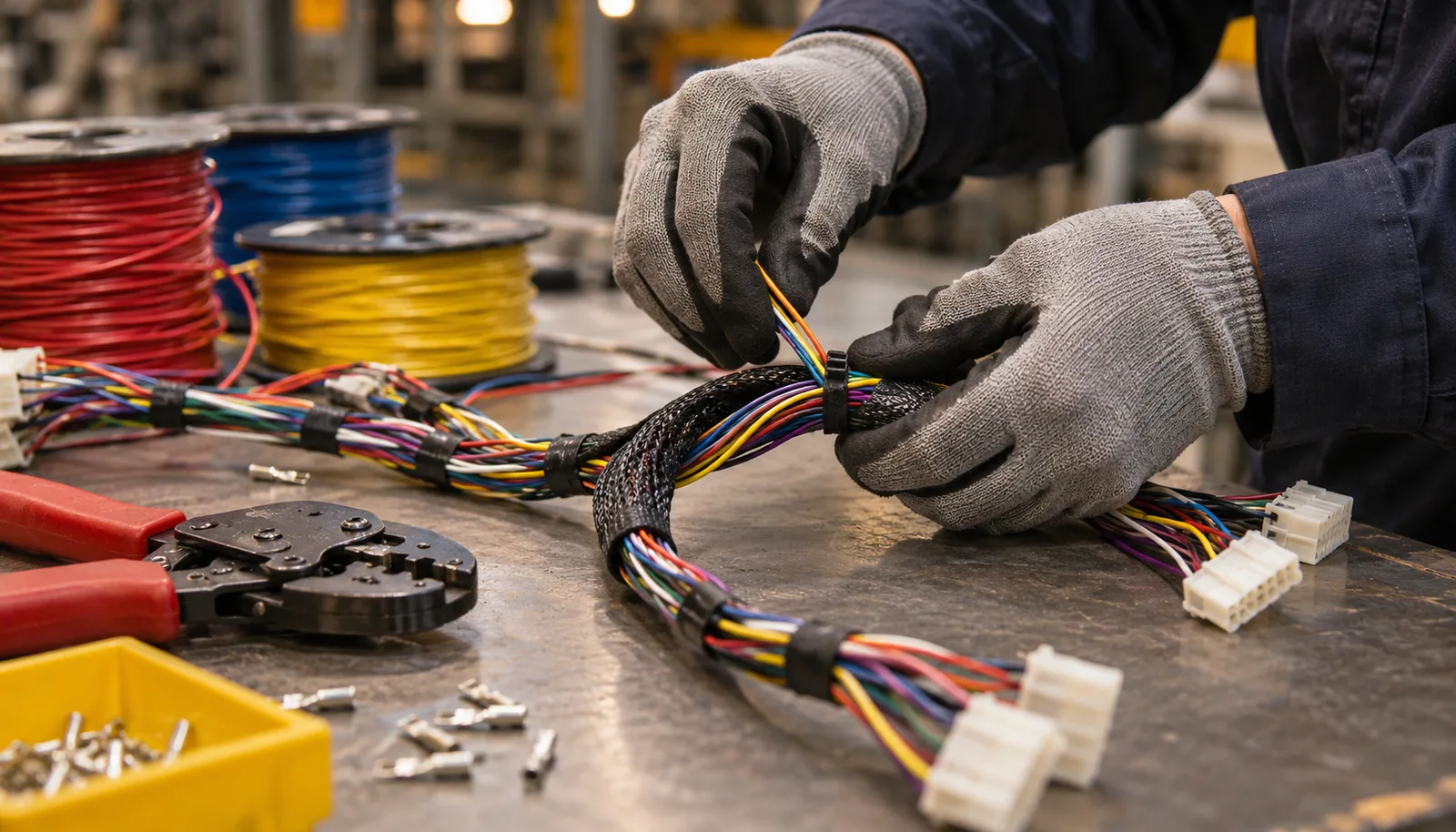
Several factors influence the decision between custom and off-the-shelf harnesses. First, assess your application's operating environment. Factors like temperature, moisture, and vibration can affect harness performance. Second, consider the volume of units needed. High volumes can offset the costs of custom tooling. Third, evaluate the total cost of ownership, including maintenance and downtime. Fourth, review compliance requirements. Standards such as IPC/WHMA-620 provide benchmarks for harness assembly. Fifth, consider lead times. Off-the-shelf harnesses are quicker to source, while custom designs require development time. Finally, think about future scalability. Custom harnesses can be designed with growth in mind. Also, assess the availability of components and the supplier's capability. Each of these factors plays a role in the final decision.
Making the Right Choice
Ultimately, the choice depends on your priorities. If you need quick, low-cost solutions for standard applications, off-the-shelf harnesses are suitable. If your project demands precise performance and integration, custom harnesses are worth the investment. Collaborating with experienced manufacturers can help you balance these factors. By understanding the pros and cons, you can select the harness that best supports your product's success. Remember to review your specific needs and consult with experts to ensure the best outcome. Both options have their merits, and the right choice will align with your project goals. Take time to evaluate all aspects before deciding.